Month: October 2012
Branding in a recovering economy
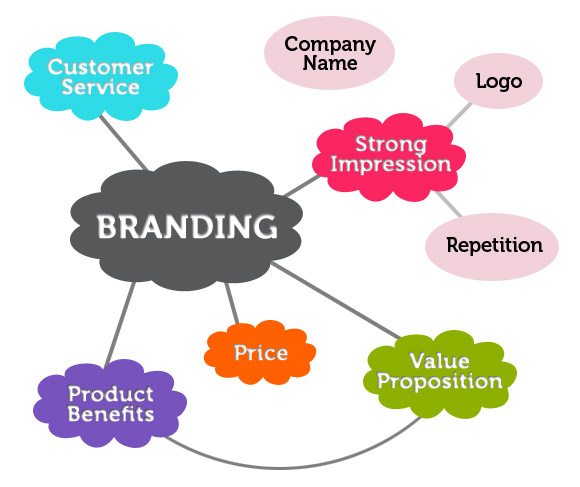 The issue of branding in all economies always draws interesting opinions especially bacause it costs money to develop and maintain branding in a postion that gives organisations competitiveness in their markets. The challenges in a recovering economy for brands and branding will inevitably emanate from the same issue of resources epscially money. The allocation of capital into developing and maintaining brands pales into the background as organisations struggle to survive within a challenging environment. The inspiration for this article is investigating how organisations accomodate branding as business strategy component during difficult times.
The interesting part of this assessment is how do organisations juggle the allocation of resources in the process of sustaining the organisations so that it contunes to be functional but also maintains a presence on the market through marketing and brand management activites that garner consumer attention but more importantly sales!
Marketing as a practise is often percieved as a investment heavy function that suffers first during spending cuts and downsizing but it is my opinion that reduction of spending in revenue generation activities is perhaps the wring strategic move to make. Alternatively I would suggest that business leaders consider re-orientating their business models into demand driven business that invest in lead generation and higher conversion of enquiries into sales. This strategy can only be driven by strong market presence and brand recognition in target markets. The marketing mix is this case becomes the driver of lead generation and enquiry conversion through configuring all elements so that they give marketers the best opportunity to present the product to the market.
Overall I feel there is too much unneccessary caution in strategic planning when it comes to responding to external pressures on sales and operations of businesses which compounds the pressure as business activity shrinks from cuts in production, workforce, marketing and innovation for brand development. There needs to be greater bullishness in finding alternatives in a process that is led by creative and innovative approaches to strengthening brands espeically long established brands that have emotional real estate in the market.
Branding represents much more that the logo of an organisations it communicates the value an organisation brings to its customers, its ethos on customer service, the quality of its products and the company’s position in the minds of its customers all encapsulated in a logo, font and colour. So look around and look at the brands you use and ask yourself if you see all those qualities in their logos, font and colour?
Defining customers service in Africa; route towards improvement in customer service
 Being a regular visitor to Africa in the last 11 months I have experienced varying degrees of customer service quality and concluded that getting “good” quality customer service is still a far fetched dream in almost all service encounters.
A few other travelling colleagues have been discussing how we could drive Africa towards universal good customers service as some research has identified Africa as a future destination for western companies looking to outsource customer service functions to African countries. There are several implications to finding a solution to customer service delivery in Africa, first of which is creating better experiences for customers and improving customer retention. Secondly if Africa is to realise the potential expressed in the above research referred then we need to have a marketable product by ensuring that every customer encounter with service delivery is positive, because you never know who your next customer might be.
It is my opinion that the process of improving African customer service provision must start with developing a clear understanding of how customer service is perceived in the Africa context. The lack of resources, imbalance between demand and supplier in many service encounters means that the supplier usually has an upper hand in most encounters thus removing the obligation on their part to be good to the customer who is dependent on them. This is in total contrast to environments where supply outstrips demand and so companies’ service provision is obliged to treat the customer as “king” in order to retain their custom. This reality of the service encounter in Africa reduces the customers’ bargaining power and potential to switch to an alternative source for either product or service. In the end the African customer feels obliged to accept sub standard customer service as a means to an end.
African private enterprise has substantially better service delivery than public service especially government services like passport offices, registration of births and deaths, medical service and any other essential services that a customer might expect from the government. Perhaps customer service personnel in public service offices do not even regard the people they serve as customers, which then removes the need for “good” customer service. Private enterprise on the other hand recognises the relationship it has with the people they service but greater demand than supplier reduces the impetus to provide “good” customer service.
My conclusion is that there is need for cultural re-orientation to get the customer to demand “good” customer service and service providers from both public and private sectors to view customers as opportunities to create relationships that will continue positively beyond each service encounter. This change will require leadership in both private and public sectors, training and adoption of clearly defined performance parameters supported by systematic evaluation. But the starting point must be a review and analysis of prevailing perceptions of “good” customer service to the provider and customer in Africa.
 Taf Masiye