Defining customers service in Africa; route towards improvement in customer service

Being a regular visitor to Africa in the last 11 months I have experienced varying degrees of customer service quality and concluded that getting “good” quality customer service is still a far fetched dream in almost all service encounters.

A few other travelling colleagues have been discussing how we could drive Africa towards universal good customers service as some research has identified Africa as a future destination for western companies looking to outsource customer service functions to African countries. There are several implications to finding a solution to customer service delivery in Africa, first of which is creating better experiences for customers and improving customer retention. Secondly if Africa is to realise the potential expressed in the above research referred then we need to have a marketable product by ensuring that every customer encounter with service delivery is positive, because you never know who your next customer might be.

It is my opinion that the process of improving African customer service provision must start with developing a clear understanding of how customer service is perceived in the Africa context. The lack of resources, imbalance between demand and supplier in many service encounters means that the supplier usually has an upper hand in most encounters thus removing the obligation on their part to be good to the customer who is dependent on them. This is in total contrast to environments where supply outstrips demand and so companies’ service provision is obliged to treat the customer as “king” in order to retain their custom. This reality of the service encounter in Africa reduces the customers’ bargaining power and potential to switch to an alternative source for either product or service. In the end the African customer feels obliged to accept sub standard customer service as a means to an end.

African private enterprise has substantially better service delivery than public service especially government services like passport offices, registration of births and deaths, medical service and any other essential services that a customer might expect from the government. Perhaps customer service personnel in public service offices do not even regard the people they serve as customers, which then removes the need for “good” customer service. Private enterprise on the other hand recognises the relationship it has with the people they service but greater demand than supplier reduces the impetus to provide “good” customer service.

My conclusion is that there is need for cultural re-orientation to get the customer to demand “good” customer service and service providers from both public and private sectors to view customers as opportunities to create relationships that will continue positively beyond each service encounter. This change will require leadership in both private and public sectors, training and adoption of clearly defined performance parameters supported by systematic evaluation. But the starting point must be a review and analysis of prevailing perceptions of “good” customer service to the provider and customer in Africa.

What should companies use Facebook for?


Much of the hype behind the actual value of Facebook was to an extent based on the business potential of the site in terms of it being used as a market platform for companies. But, a big but, the transformation of facebook from being a free service for individual user to a site that companies use to target the free service users has many obstacles to over come, firstly how will customers react to deliberate commercialisation of their social capital? there are lessons to learn from the experiences at myspace and capitalisation of social interaction, it didn’t work too well. The next question is how can companies guarantee that their investment will receive coverage that justifies the expanditure on advertising on facebook? There are already several conspiracy theories regarding coverage, exposure and publicity limitations being imposed, randomly or otherwise, by facebook. So, investment on advertising might only produce a fraction of expected market outcomes afterall.

My reservations against the investment in advertsing on Facebook, as shared by www.larrykwirirai.com, are based on two observations, one of which is that marketers are being opportunistic in trying to convert social interaction into commercial capital. And, the other is that, without complete control if this process, since Facebook will manage all the analytics, there are serious strategic gaps that bring up red flags to observers.

I personally think any company looking to use Facebook as an out and out marketing platform to sell products need to fire their marketing team. Selling and overtly capitalist conduct goes against the whole ethos of social media!. Facebook should be a relationship building platform used to develop brand affinity and general communications while giving customers access into the organisation. It’s all about interaction and whether or not this leads to increased sales is dependent on the use of the data gathered via these interactions with customers and strategic capability of the marketing department to convert brand awareness into brand loyalty.

Just because Facebook has hundreds of millions of people to sell things to doesn’t mean marketers should be lazy, there is still the need to be creative be proactive in responding to customers needs if marketers are to successfuly sell their products while using Facebook as part of an effective marketing strategy!

Can we do creative?

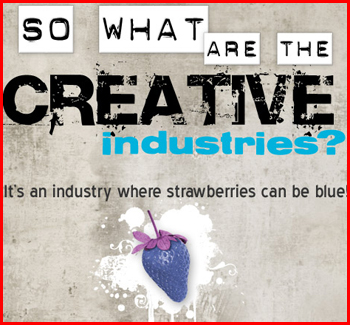
It is suggested by some that much of the wealth creating opportunities left in the free market are in the creative industries sector because the production and manufacturing opportunities are all going towards the east due to the competitiveness of their cost to the outsourcing market. Having sat in a symposium on how to teach creative modules at university or even before university, I found myself wondering about the African context in terms of creativity, creative learning and how the continent could tap into these suggested wealth creation potentials that exist in creative industries.

Without getting to deep into the hows, it may be opportune at this point to quantify just what creative industries are. These are industries that a founded on individual creativity, talent, skill and entrepreneurship that produces wealth creation opportunities and jobs thought intellectual property. So, in a nutshell using your brains to create something valuable enough for others to want to pay for it but still remaining the sole owner of the idea or concept. The best example of this is Music, artist or musicians make music to sell to listeners but still retain ownership of the rights to the music and its future earnings.

So as Africans we are already there, we have world famous musicians both old and new, we have world famous sports people gracng the world’s stage. But this is probably only benefiting those directly related to the owners of the said intellectual properties. I am looking at creative industries in the sense of creating wealth for the continent at large, something similar to how China as a nations is rich and individuals in the country get opportunities to be wealth in that economy. I use the term wealth because that is more sustainable than rich. Riches are exhaustable but wealth builds on itself and can be never ending if done right.

The question at the head of this piece is “Do we do creative?” I suppose what I am driving at is the question of whether Africa as a whole or different countries in part can find a niche segment in the global market to start its own creative industries. The options are many, from advertising, architecture, art and antiques, computer games, crafts, design.

Kenya and Rwanda are selling internet based customer management solutions, using VOIP to run call centres of behalf of western companies. I feel this is the way to go for Africa’s future, creative industries can operate on minimal financial input, require a lot of hard work and ingenuity which a lot of Africans have, how else do we continue to survive in the face of all the challenges that engulf the continent?

Be creative!